
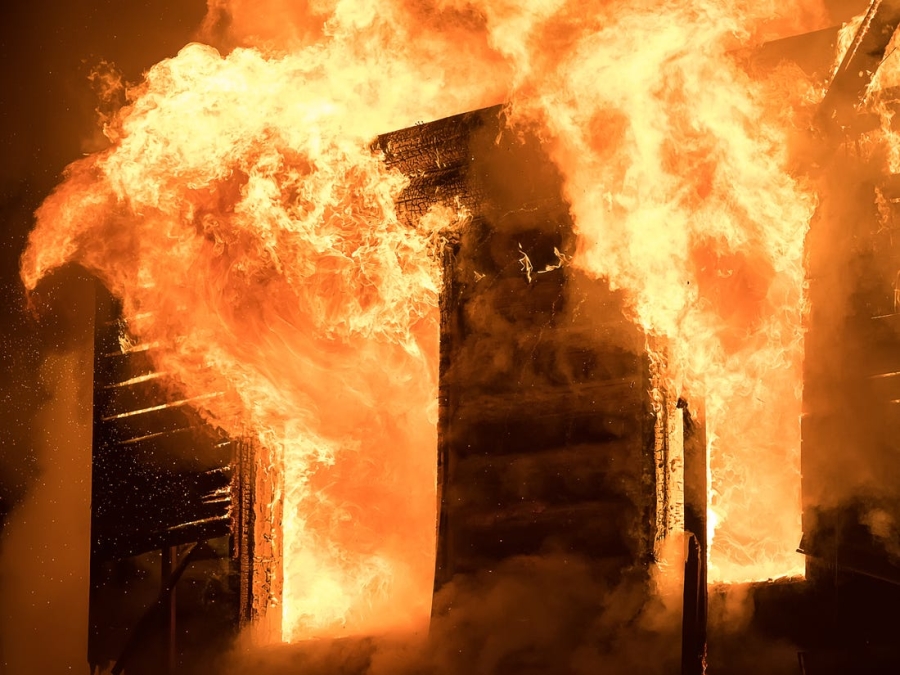
Enforcing fire safety measures used to be a low priority for Greek government in the past few years. However, globally, that notion has changed after the loss of life and property in construction because of fire. Governments started to realize the importance of these measures and finally, the implementation of a more rigorous framework after high public demand was necessary.
FIBRAN is a founding member of The Hellenic Institute for the Fire Safety of Structures (ELIPYKA) which plays an important role in creating a new (more compatible to the European standards) Fire Protection of buildings Regulation. The company’s first aim is not to boast about their effective insulating material but most importantly to prevent the use of inappropriate flammable materials especially in some specific parts of the building where in case of fire, its spread and smoke emissions would make the safe evacuation of the building challenging.
Fireproofing products and insulating systems according to the International and European Fireproofing Standard in fire response EN 13501-1, are classified in these main classes:
- A1: Non-combustible materials (e.g., rockwool)
- A2: Almost Non-combustible materials (e.g., ETICS rockwool with organic coating)
- Β:Combustible materials –very limited contribution to fire (e.g. ETICS EPS with Non-combustible coating)
- C: Combustible materials –limited contribution to fire (e.g., ETICS EPS with organic coating)
- D: Combustible materials –medium contribution to fire
- E: Combustible materials –highly contribution to fire (e.g., Fibran Eps with additional fire-retardants)
- F: Combustible materials –easily flammable (e.g., Fibran Eps without fire-retardants)
After the installation of the necessary external thermal insulation systems (thermal facade or ventilated facade), the quality of the external fire protection of the walls should be maintained intact and not to be dilapidated. For that serious reason, the fireproofing material and the thermal insulation system should be non-combustible materials A1 or A2 class.
The rockwool is a fireproofing and non-combustible material Euroclass A1, which not only is it not burnt but it does not emit any smoke as well, allowing the tenants of the building to safely evacuate it with ample of time and the fire brigade to reach the place of the fire in time. It melts in temperatures beyond 1500 Celsius degrees.
Therefore, the thermal Facade with rockwool and organic coating does not only have a perfect thermal insulation, soundproofing and wall transpiration but also is a non-combustible wall cladding of A2 class. As rockwool is inherently non-combustible and consequently, far more effective than any other insulating material, insurance companies internationally charge lower insurance fees for those whose property is fitted with rockwool insulation.